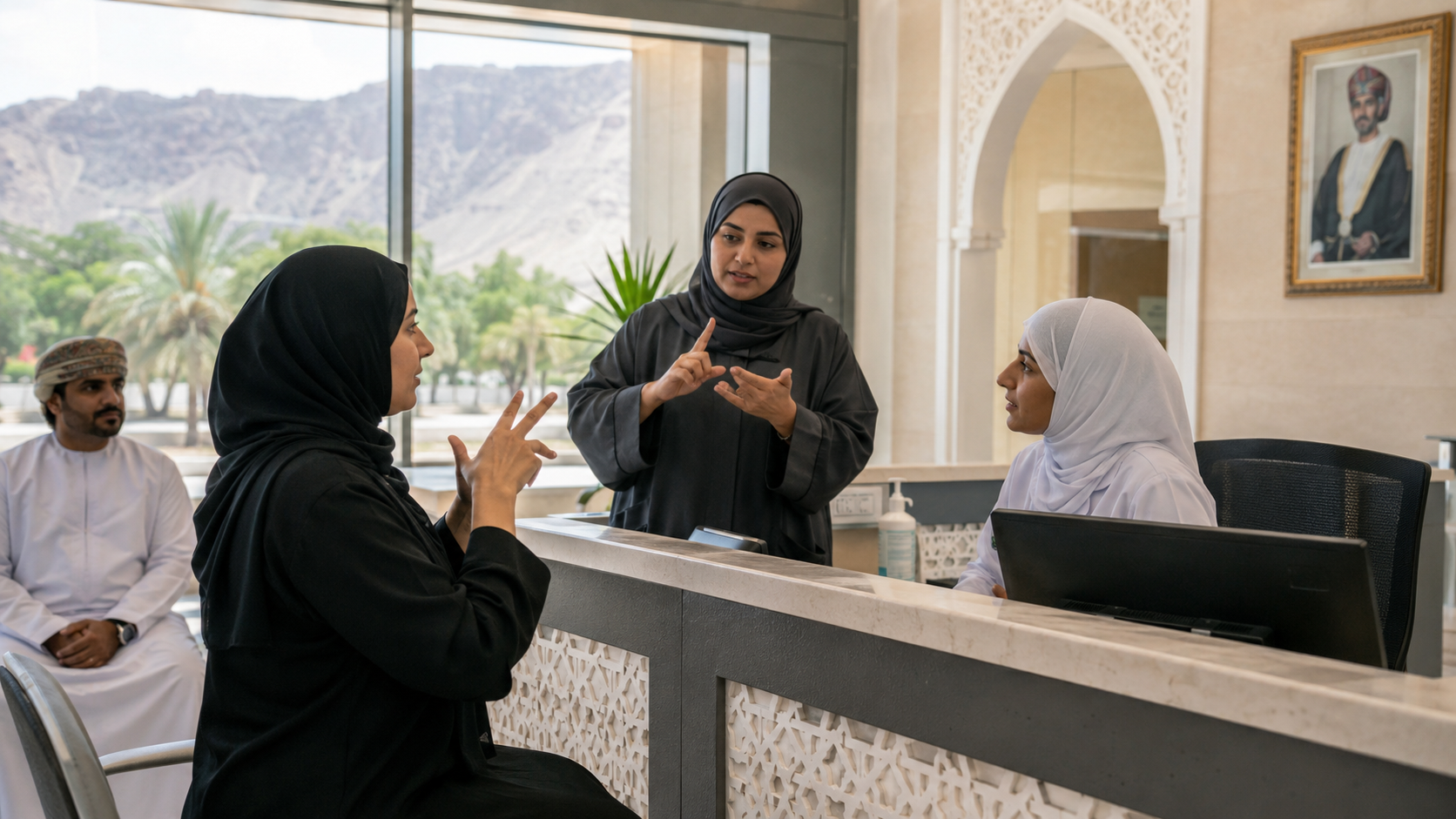
DHOFAR: The deaf community in Dhofar faces persistent challenges in accessing public services, conferences, and critical information due to a shortage of sign-language interpreters, according to local volunteer groups. Data from 2025 indicates there are nearly 1,000 deaf individuals residing in Dhofar, yet sign-language support has not grown in tandem with their needs.
Hanaa al Shidad, a board member of the Salalah Volunteer Team, noted that many local events and conferences do not utilize interpreters, even though trained sign-language specialists are available and ready to assist. Public facilities are similarly not fully equipped to allow deaf individuals to communicate independently. The main hurdle is ensuring that interpreters are present at the exact times and locations they are needed.
To address this gap, volunteer groups like "Bil Ishara Naltaqi" (We Meet Through Sign Language), founded by Hani bin Juma al Malkhi, step in to assist. Al Malkhi highlighted that the lack of interpreters is a primary challenge, particularly during short-notice requests or across diverse public and private sector activities. His team provides voluntary translation services to government, private, and community groups. When an in-person interpreter cannot be dispatched, the Salalah Volunteer Team often utilizes video calls to provide remote interpretation.
The Omani Association for Persons with Disabilities in Dhofar and the Salalah Volunteer Team remain the primary community organizations supporting local individuals with hearing impairments. Additionally, "Bil Ishara Naltaqi" hosts workshops across various sectors to foster sign-language awareness, with a strong emphasis on the healthcare sector. Effective communication in medical facilities is vital, as barriers there can prevent patients from accurately describing symptoms or understanding medical advice.
Education is another area facing limitations. While Dhofar University offers a two-year Diploma in Computer Science tailored for students with hearing impairments, Al Shidad pointed out that a lack of other specialized local higher-education programs severely restricts career paths for deaf students.
These ongoing challenges persist despite the enactment of Oman's Rights of Persons with Disabilities Law under Royal Decree No 92/2025. This legislation mandates that relevant organizations provide qualified sign-language interpreters and guarantees broader access to education, information, and public services for people with disabilities.