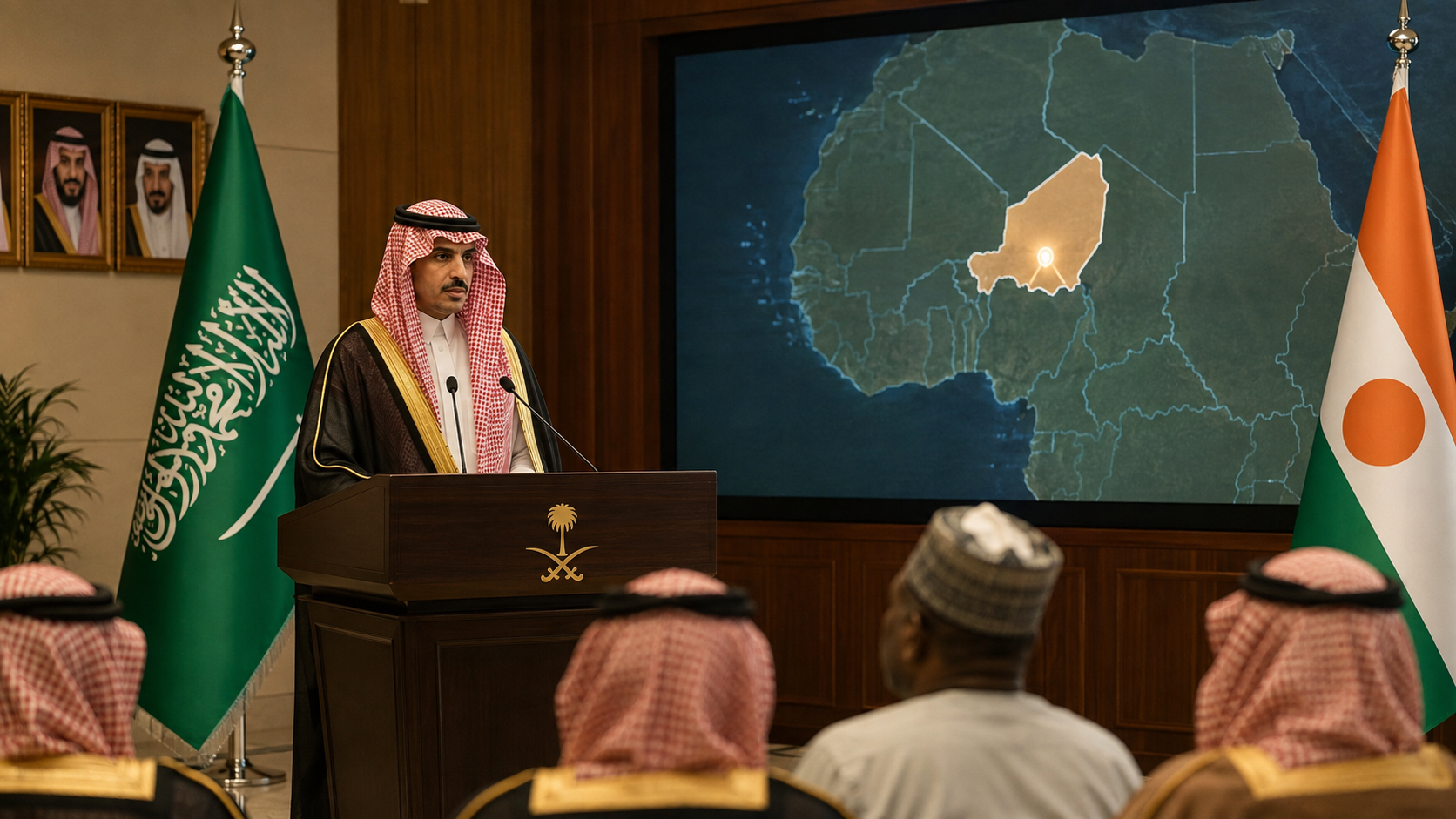
RIYADH — The Ministry of Foreign Affairs expressed Saudi Arabia's condemnation and denunciation of the rebellious attacks that took place in Niamey, capital of Niger. In a statement, the ministry affirmed the Kingdom's solidarity with the government and people of Niger against any attempt to undermine its security and stability. "Saudi Arabia affirms its support for all efforts that contribute to preserving the security and sovereignty of the Republic of Niger and protecting its resources from the meddling of rebel groups,” the ministry said, while wishing continued security and prosperity for Niger and its people. Mutinous soldiers in Niger attacked the airport and the presidency in the capital, Niamey, early on Saturday, triggering hours of gunfire and explosions and briefly knocking state television and radio off air.
Saudi Arabia condemns attacks in Niger’s capital
RIYADH — The Ministry of Foreign Affairs expressed Saudi Arabia's condemnation and denunciation of the rebellious attacks that took place in Niamey, capital of Niger. In a statement, the ministry affirmed the Kingdom's solidarity with the government and people of Niger against any attempt to undermine its security and stability. "Saudi Arabia affirms its support for all efforts that contribute to preserving the security and sovereignty of the Republic of Niger and protecting its resources from the meddling of rebel groups,” the ministry said, while wishing continued security and prosperity for Niger and its people. Mutinous soldiers in Niger attacked the airport and the presidency in the capital, Niamey, early on Saturday, triggering hours of gunfire and explosions and briefly knocking state television and radio off air.
How this article was produced
Original sources
Related reading
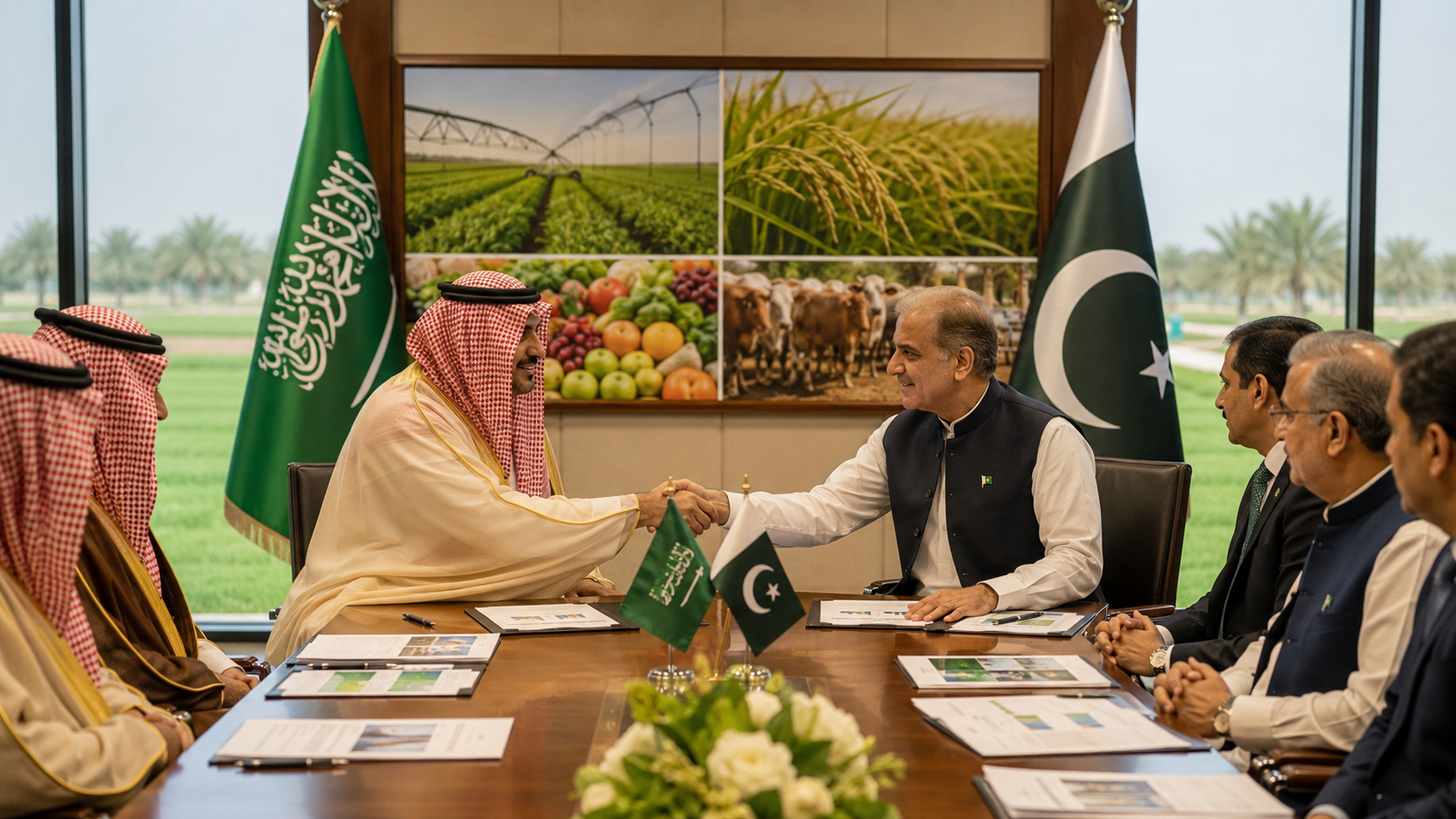
Saudi Arabia agrees to raise Pakistani agricultural and food exports to $3 billion
RIYADH — Saudi Arabia and Pakistan have agreed to strengthen bilateral cooperation in food security and agriculture, with both sides expressing their shared aspiration to raise the value of Pakistani agricultural and food exports to Saudi Arabia to $3 billion. The agreement was announced in a joint statement issued at the conclusion of the official visit of the high-level Saudi delegation to Pakistan from August 26 to 28. The delegation was headed by Minister of Environment, Water and Agriculture Eng. Abdulrahman Al-Fadhly and included senior officials from the ministry, the General Authority for Food Security, and other relevant entities. The Pakistani side was headed by Minister of State for Food Security and Research Rana Tanveer Hussain and included senior government officials and representatives of the private sector in Pakistan. Both sides affirmed the strength of their long-standing historical relations and commended the level of integration in advancing food security priorities by enhancing the export capabilities of the agricultural and food sector. Discussions focused on priority sectors, including rice, red meat, fruits and fruit concentrates, green fodder, and water-efficient agricultural technologies. Pakistani rice imports to the Kingdom in 2025 reached approximately 169,000 tons, valued at an estimated $163 million. Both sides expressed interest in expanding bilateral trade in the coming years. Pakistani meat imports to Saudi Arabia reached approximately 30,000 tons annually, valued at $167 million, with the Saudi side expressing its desire to double these imports in the future. The two sides also identified promising opportunities in the fruit sector and agreed to increase Pakistan's share of exports in the Saudi market, empower the private sector, facilitate communication between businesspeople, and expand mutual recognition of quality certificates.The Saudi side highlighted green fodder as a promising sector for expanding trade and developing long-term supply partnerships. The Saudi delegation also encouraged Pakistan to join the International Date Council, an invitation welcomed by the Pakistani side. Both sides expressed satisfaction with the completion of the first phase of the "Water-Saving Irrigation Program" in the Bhakar region of Punjab province and expressed interest in the proposed second phase aimed at supporting small farmers. They also reviewed investment proposals from Pakistani private sector companies in livestock, agricultural processing industries, and rice value chains. Both sides agreed to coordinate and work together to explore and capitalize on these investment opportunities. The Saudi delegation's visit included a briefing on the Strategic Plan for Agriculture and Food Security between Pakistan and Saudi Arabia, meetings with the Pakistan Private Investment Facilitation Council (SIFC), the Fauji Foundation, and the Pakistan-Saudi Arabia Agricultural Business Council, as well as a visit to the National Agricultural Research Centre (NARC). Both sides reaffirmed their commitment to strengthening the comprehensive strategic partnership between the two countries. The Pakistani side welcomed the invitation to attend the 43rd Saudi Agriculture Exhibition, to be held in Riyadh in October. Both sides expressed satisfaction with the outcomes of the visit and agreed to continue joint coordination to follow up on the implementation of the understandings reached.
Read article →
Saudi Arabia launches first national Food Composition Database
RIYADH — The Saudi Food and Drug Authority (SFDA) has launched the Kingdom’s first Food Composition Database, providing accurate nutritional data on local foods and traditional dishes consumed across Saudi Arabia. Represented by the National Nutrition Committee and developed under the Health Sector Transformation Program, the Saudi Food Composition Database is based on approved scientific methodologies and high-quality standards. The database serves as a national reference for food composition data across the health, research and nutrition sectors, providing comprehensive information on energy, carbohydrates, proteins, fats, vitamins, minerals and dietary fiber. As part of broader efforts to advance national food data systems, support evidence-based decision-making and improve nutritional health and quality of life, the initiative aims to strengthen food and nutrition policymaking, support scientific research and health studies, and raise community awareness of health and nutrition. It also supports the food manufacturing sector in developing local products and enhancing their nutritional value. By making nutritional data more accessible, the database contributes to digital transformation across the health and food sectors, enabling developers to create digital tools to assess dietary patterns and nutritional status. This, in turn, will strengthen the integration of data, technology and public health.
Read article →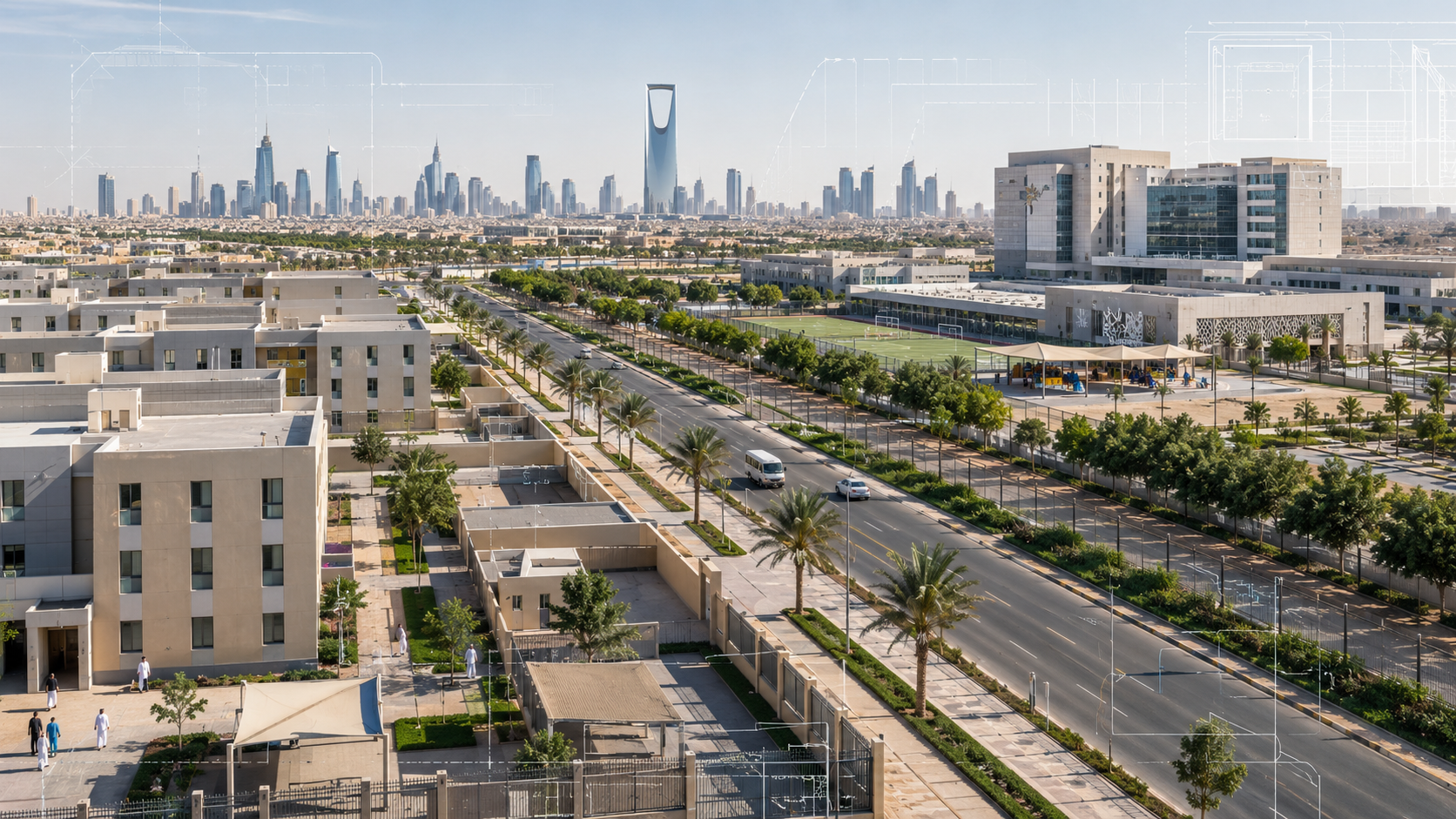
300-meter buffer zone mandated for shared housing near schools, hospitals
RIYADH — Regulations governing shared housing for individuals prohibit its construction in specific areas and neighborhoods. The building must be located at least 300 meters away from schools and hospitals and must not be situated in designated areas where activities are prohibited. Residents must comply with the population densities stipulated in urban and local master plans. The building entrance must be located on a main road, arterial road, or local street with a minimum width of 20 meters, while ensuring privacy and preventing direct views of neighboring properties. The requirements also include connecting shared housing to main roads and public transportation networks. In addition, one parking space must be allocated for every 40 residents, while bus parking spaces must have sufficient capacity for 50 percent of the building’s residents. Designated parking spaces for people with disabilities must also be provided near the main entrances and elevators. The Ministry of Municipalities and Housing recently approved the health, safety, and technical requirements for shared housing for individuals. Operating licensees have been granted a grace period of at least one year, or until the expiry of their license, to rectify any deficiencies and ensure compliance with health, technical, and safety standards. The ministry exempted buildings and residential complexes that had previously been issued building permits as shared housing for individuals, or as private or gated residential complexes, from spatial planning requirements, provided they comply with health, technical, and safety standards. The regulations classify shared housing for individuals into three categories based on capacity and the nature of their basic facilities and services. The first category comprises a building consisting of one or more floors, with a total height not exceeding 23 meters from ground level, and containing a number of residential units.The second category consists of a group of independent residential buildings, such as apartment buildings and villas, surrounded by an external wall with security gates for entry and exit, along with guards.The third category comprises mobile cabins within projects that can be transported from one location to another and are used temporarily at project sites to accommodate workers. The operating license is valid until the completion of the project or for a maximum period of one year, which is renewable.
Read article →