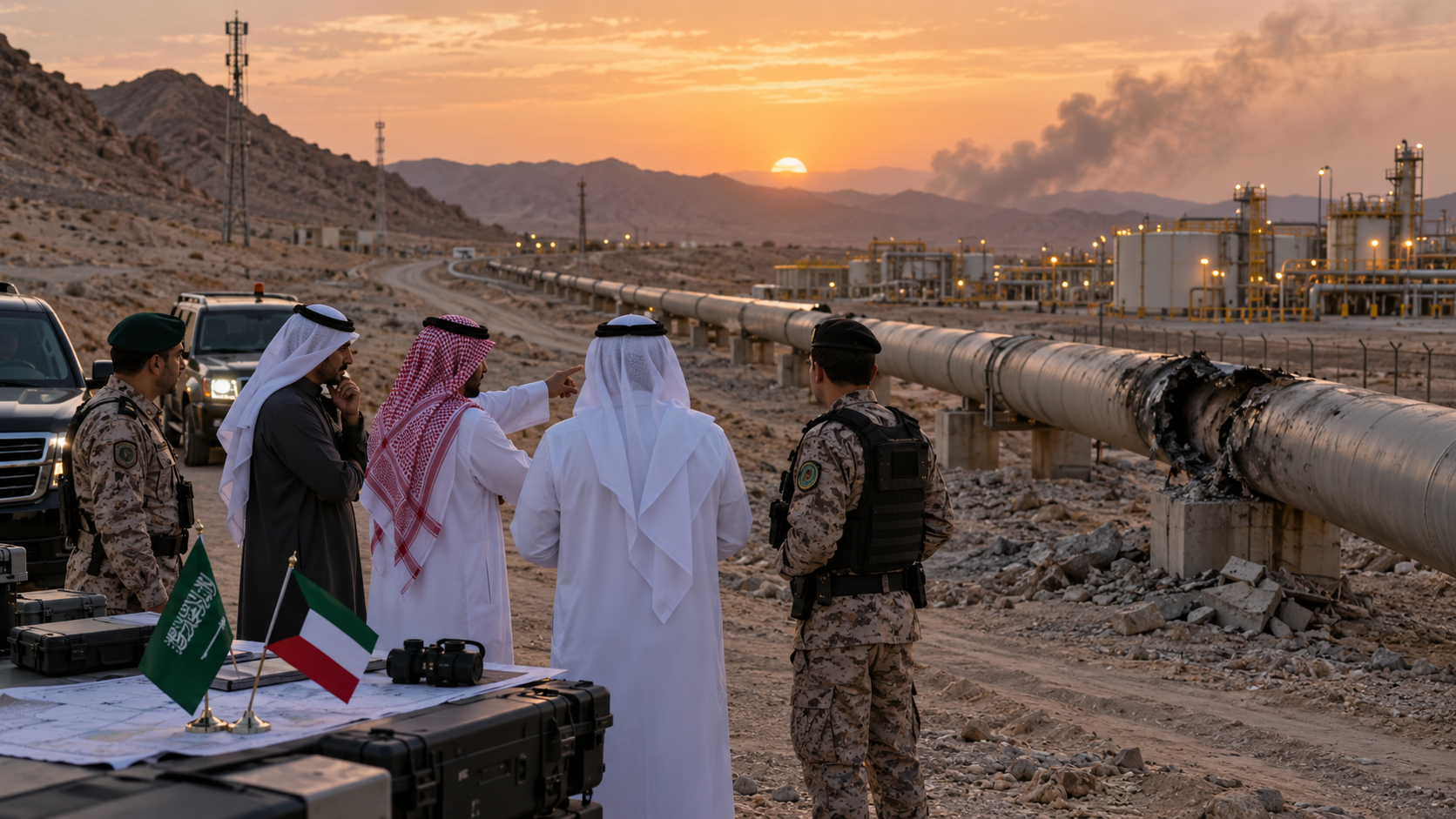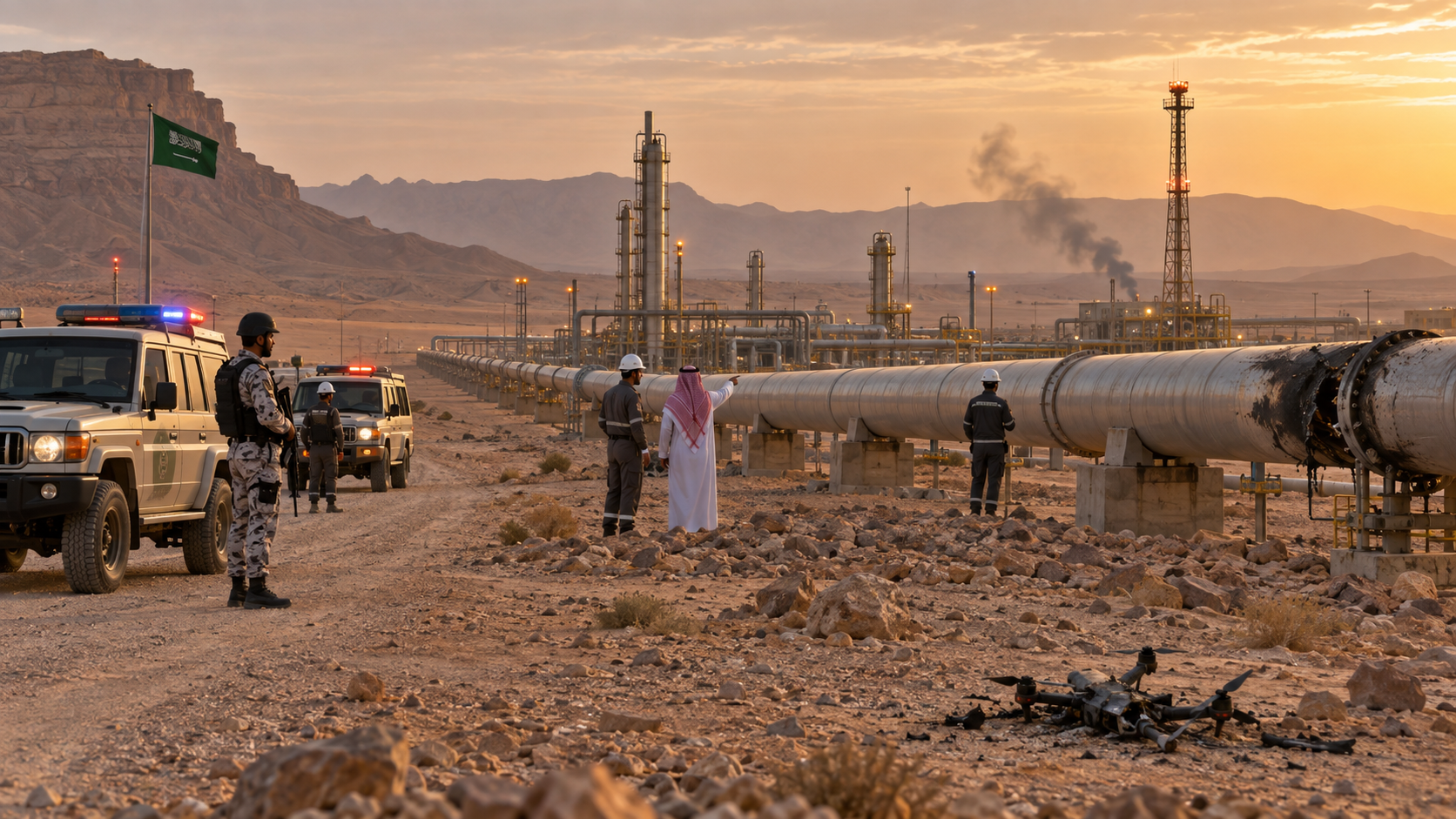
Saudi Arabia temporarily shut its East-West oil pipeline after a drone attack that authorities said caused injuries and material damage, adding a new pressure point to regional energy security at a time of heightened conflict around the Arabian Peninsula.
The BBC reported that the drones were launched from Iraq and struck the 1,200-kilometre pipeline, a major route that carries crude from Saudi Arabia’s eastern oil-producing areas to the Red Sea coast. The route is strategically important because it gives the kingdom an alternative to shipping oil through the Strait of Hormuz.
Saudi authorities said the pipeline was closed as a precaution while the damage was assessed. Satellite imagery cited by the BBC showed scorched ground and smoke near the site of the attack. The Saudi Foreign Ministry said the incident caused injuries and damage, while stressing that the kingdom reserved the right to take measures needed to protect its sovereignty, infrastructure, citizens and residents.
Iraq’s government also opened an investigation after confirming that the drones had been launched from Maysan province, which borders Iran. The office of Iraq’s prime minister said the regional operations commander had been removed from his post after the origin of the attack was established.
Riyadh did not immediately announce retaliatory action. According to the BBC, Saudi Arabia said it would support the Iraqi government’s efforts to prevent Iraqi territory from being used for attacks against neighbouring states. The incident nevertheless added to concern about the vulnerability of energy infrastructure across the Gulf.
The East-West pipeline has taken on greater importance during periods of disruption around the Strait of Hormuz. Reuters estimates cited by the BBC indicated that the route had recently been carrying the equivalent of about 4% to 5% of global oil supply. Any prolonged interruption would therefore have implications beyond the kingdom, particularly if maritime routes in the Gulf and Red Sea are under simultaneous pressure.
The Gulf Cooperation Council condemned the attack. GCC Secretary-General Jasem Mohamed Albudaiwi described it as a dangerous escalation and a threat to Saudi Arabia’s security, territorial integrity and vital installations, according to the BBC report.
The pipeline incident came as fighting in Yemen intensified. Houthi forces had advanced along parts of the Red Sea coast and claimed control of the Bab al-Mandab area, while forces aligned with Yemen’s internationally recognised government reported strikes against Houthi positions around Mokha and elsewhere. The BBC said the developments had increased pressure on shipping routes on both sides of the Arabian Peninsula.
Energy markets were already reacting to the broader regional conflict. The BBC reported crude oil prices had moved above $100 a barrel for the first time since July, while analysts warned that longer shipping routes and higher transport costs were reducing the buffers that had helped markets absorb earlier disruptions.
For Saudi Arabia, the immediate priority is the security and restoration of the East-West pipeline and preventing a repeat attack. For Iraq, the investigation is likely to focus on how drones were launched from its territory and whether armed groups were involved. The event also raises wider questions for Gulf governments about the protection of cross-country pipelines, export terminals and other infrastructure during a period of elevated regional risk.
GulfPulse will continue to distinguish confirmed official findings from claims made by parties to the wider conflict as investigations into the attack proceed.