India’s eastern state of Odisha has expanded its investment engagement with the United Arab Emirates, using a high-level visit to Dubai to pursue projects across technology, logistics, metals, food processing and the circular economy.
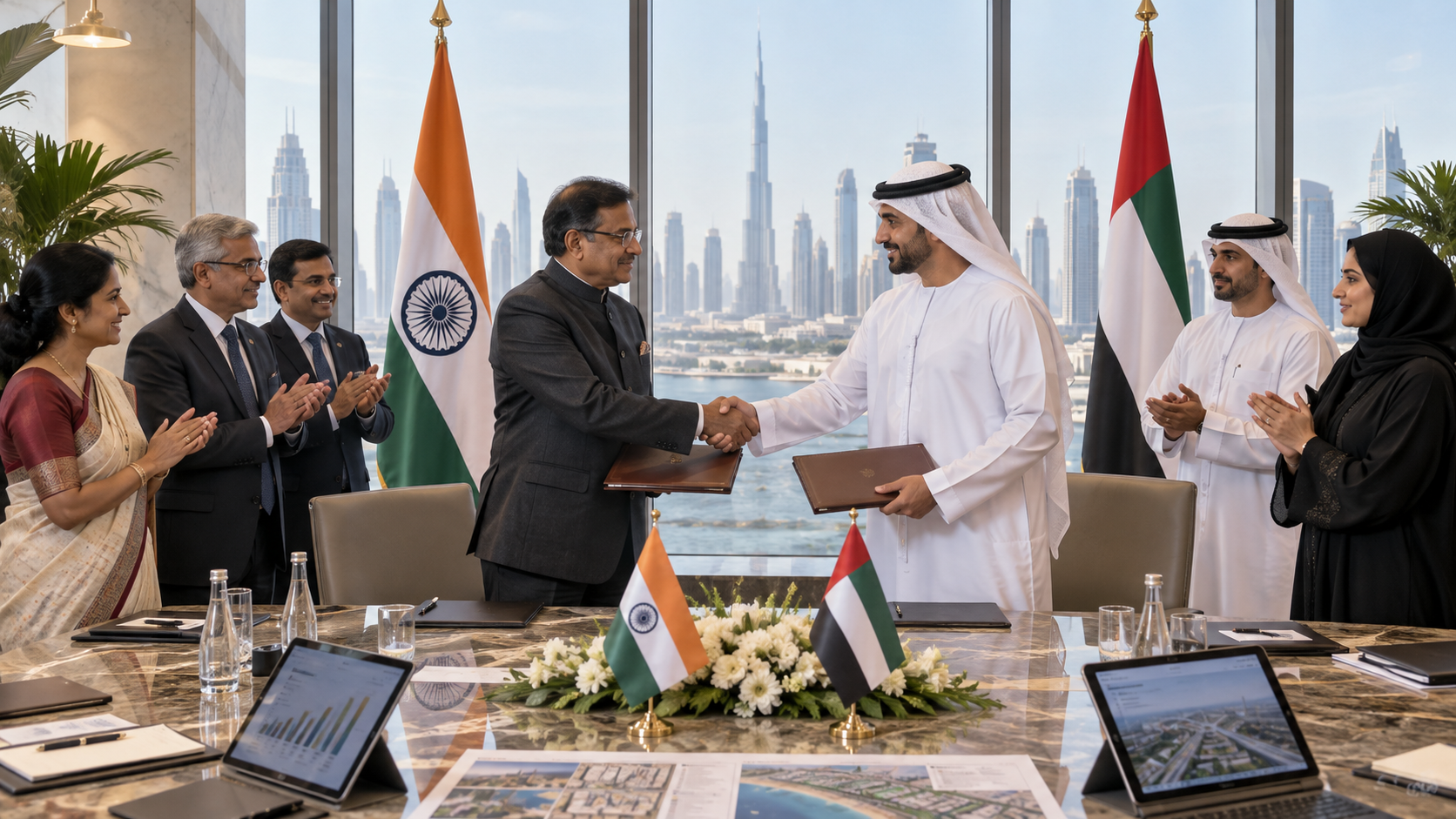
According to the Emirates News Agency, Odisha Chief Minister Mohan Charan Majhi’s visit produced five memoranda of understanding and eight investment intents. The package represents an estimated investment potential of $880 million and could support 14,310 jobs if the proposed projects move into implementation.
The engagements covered a broad range of sectors, including information technology and IT-enabled services, real estate, logistics, food and agro-processing, steel and downstream industries, rare earths, chemicals, aluminium and circular-economy activities. The breadth of the discussions shows that Odisha’s outreach is not focused on a single industrial segment but on building a wider pipeline of potential Gulf-linked investment.
Majhi met UAE Minister of Economy and Tourism Abdullah bin Touq Al Marri during the visit. Their discussions focused on strengthening economic and investment cooperation between Odisha and the UAE and identifying opportunities for UAE-based investors and companies in the Indian state.
The chief minister presented Odisha as a destination seeking to combine industrial expansion with infrastructure development and more responsive investment procedures. He highlighted state policies, ease-of-doing-business measures and infrastructure as part of the case for attracting international capital.
Aluminium was one of the main areas of sector-specific engagement. A dedicated roundtable examined opportunities in Odisha’s downstream aluminium value chain, including value-added manufacturing and technology-driven production. The delegation also visited Emirates Global Aluminium, where it reviewed industrial operations and practices relevant to the sector.
The programme included discussions with the Indian Business and Professional Council in Dubai, providing a channel for engagement with Indian and UAE-based business networks. Odisha also held a roundtable with the Bureau of Middle East Recycling focused on recycling, resource efficiency and circular-economy opportunities.
Individual and group meetings with investors covered technology, real estate, logistics, food processing, chemicals, aluminium, steel downstream industries and rare earths. The state’s approach appears aimed at converting broad investor interest into specific projects rather than limiting the visit to promotional meetings.
The investment intents and MoUs are not the same as completed capital expenditure. Their significance will depend on how many move through due diligence, approvals, financing and construction. The announced job potential is therefore best understood as an estimate linked to the proposed projects, rather than employment already created.
For the UAE, the engagement reflects the depth of commercial links with India and the role of Dubai as a platform for cross-border investment discussions. For Odisha, the visit provides access to investors with interests in logistics, metals, manufacturing, real estate and sustainability-related industries.
The next measurable stage will be the conversion of the signed understandings and investment intents into final project commitments, with timelines, capital deployment and employment outcomes providing the clearest indication of the visit’s long-term impact.