Ajman Chamber has held talks with Bangladesh’s embassy in the UAE on expanding trade and investment links, with textiles, food, agriculture and pharmaceuticals identified as areas for further business cooperation.
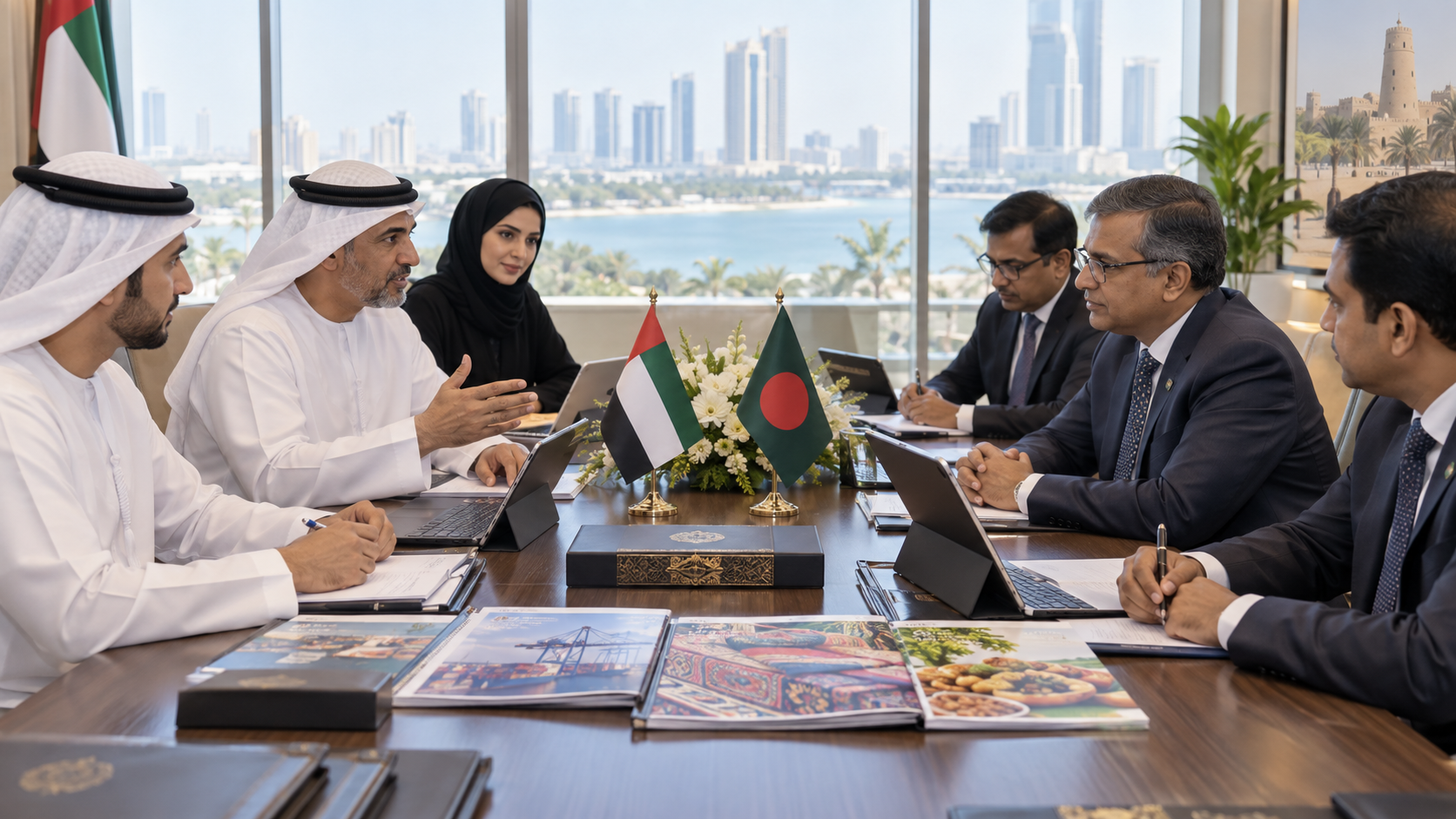
Eng. Abdullah bin Mohammed Al Muwaiji, Chairman of Ajman Chamber, received Bangladesh’s Ambassador to the UAE, Tareq Ahmed, at the chamber’s headquarters.
The meeting focused on increasing trade exchange and creating stronger links between companies in Ajman and Bangladesh, according to WAM and Ajman Chamber.
One of the main indicators highlighted during the discussions was Ajman’s re-export activity with Bangladesh, which increased by 46% in 2025. The chamber presented that growth as a basis for developing more direct business relationships between companies on both sides.
Al Muwaiji said the current level of economic engagement creates room for additional partnerships and business-to-business activity.
Ambassador Ahmed highlighted Bangladesh’s large ready-made garment manufacturing base and pointed to investment opportunities in agriculture, food production and pharmaceuticals.
Textiles are a natural area for cooperation because Bangladesh is a major global garment producer, while Ajman hosts trading, manufacturing and logistics businesses with links to the wider UAE market.
The two sides discussed organising meetings between clothing and textile factories and companies in Ajman and Bangladeshi counterparts. Such meetings would be intended to move the relationship from diplomatic discussion to commercial matchmaking.
Food and pharmaceuticals were also identified as sectors where companies could explore trade, investment and exchange of expertise.
The talks included the possibility of sharing experience and business practices, suggesting that the chamber sees the relationship as broader than import and re-export flows alone.
Ajman Chamber has been using meetings with diplomatic missions and foreign business groups to promote the emirate as a base for trade, manufacturing and services. Its location within the UAE gives companies access to domestic and regional markets as well as the country’s logistics network.
For Bangladesh, stronger links with Ajman could provide additional Gulf channels for manufactured goods and create new commercial relationships outside its traditional export markets.
The 46% increase in re-export activity is a historical performance indicator rather than a guarantee of future growth. The next stage will depend on whether the proposed business meetings produce contracts, investments or sustained increases in bilateral trade.
No new commercial agreement was announced at the meeting. The immediate outcome was therefore a framework for deeper engagement, with future business forums and company-level discussions expected to determine whether the identified opportunities translate into transactions.